


Taking an online order is the easy part.
The harder part is everything that happens next.
For dealers, eCommerce is not a novelty. It is already part of the buying process. Customers expect online ordering, account access, accurate pricing, and quick product searches. That part is understood.
The real challenge is operational.
Once an order comes in, does it move cleanly into ERP? Does inventory update automatically? Does customer pricing stay accurate? Does billing happen without manual cleanup? Can the service, finance, and warehouse teams all see the same information?
That is where many dealers still run into friction.
The storefront may be modern, but the workflow behind it may still depend on duplicate entry, manual reconciliation, disconnected customer data, and delayed updates. That gap is where margin, speed, and customer trust can start to leak.
The Real Issue Is Not Selling Online
Most dealers are not asking whether they need eCommerce anymore.
They are asking how to make eCommerce profitable, scalable, and operationally clean.
A dealer can have a strong online storefront and still struggle behind the scenes. The site may look sharp. The catalog may be searchable. Customers may be able to submit orders quickly. But if those orders still require manual entry into ERP, the business has not really automated the workflow.
It has only moved the first step online.
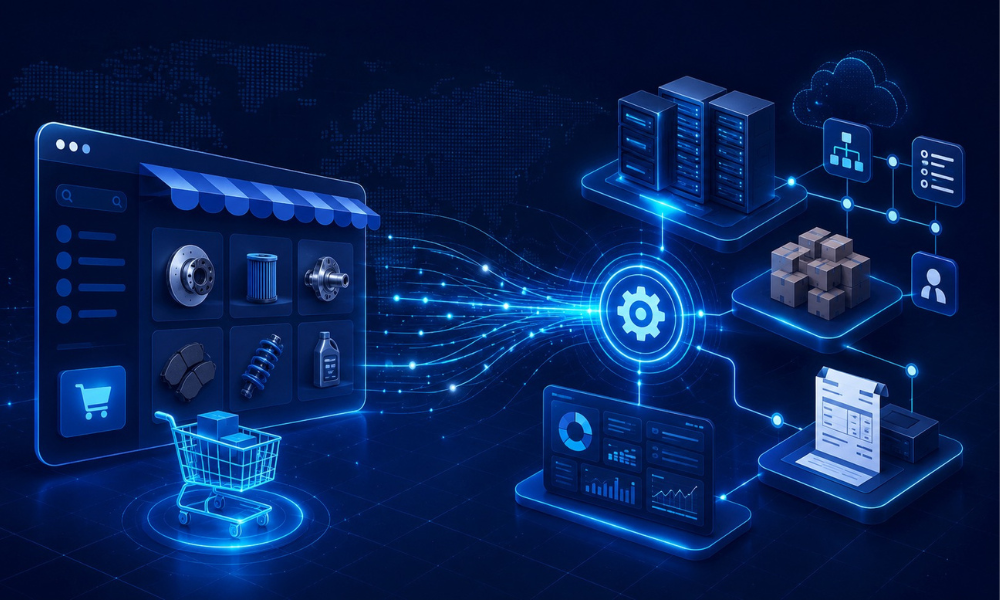
Connected commerce means the storefront and ERP operate as one system. Orders, inventory, pricing, customer accounts, billing, fulfillment, and reporting all move through a shared operational process.
That is the difference between having an online store and having a connected revenue channel.
Disconnected Systems Create Hidden Costs
Disconnected systems rarely create one obvious problem.
They create hundreds of small ones.
Someone checks the price. Someone updates inventory. Someone reenters the order. Someone fixes a customer record. Someone reconciles the invoice. Someone answers a customer question with incomplete information.
Each task may seem manageable.
Together, they create operational drag.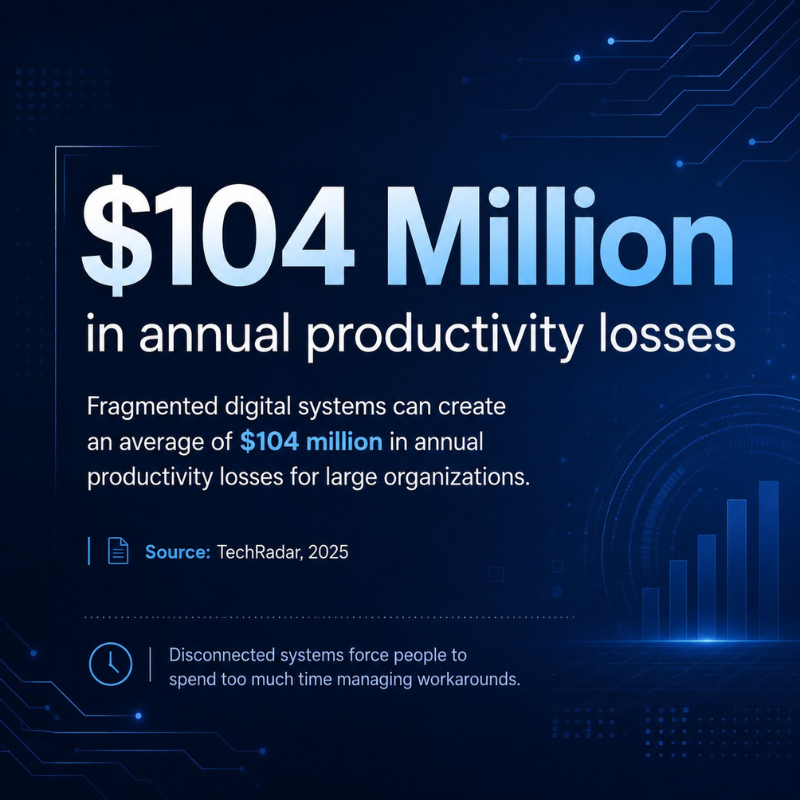

TechRadar reported in 2025 that fragmented digital systems can create an average of $104 million in annual productivity losses for large organizations. While dealer organizations vary widely in size, the lesson still applies. Disconnected systems force people to spend too much time managing workarounds.
For dealers, those costs often show up through delayed orders, billing errors, slower response times, and staff time spent correcting preventable issues.
Buyers Expect Accuracy, Not Just Convenience
B2B buyers are not only looking for a convenient ordering experience.
They are looking for confidence.
They want to know the price is right. They want inventory to be accurate. They want their account terms reflected correctly. They want the order to move without disappearing into a manual back-office process.
That requires more than a good website.
It requires connected systems.
Gartner reported in 2025 that 61% of B2B buyers prefer a rep-free buying experience. That does not mean relationships no longer matter. It means buyers increasingly expect digital self-service for routine purchasing and research.
When customers choose that path, the operational systems behind the experience must be ready.
If eCommerce and ERP are disconnected, the customer may see speed at the front end but experience delays after checkout.
Why ERP Must Sit At The Center
ERP is where the operational truth lives.
It manages inventory, customer accounts, pricing, taxes, fulfillment, purchasing, billing, finance, and reporting. When eCommerce operates separately, the storefront cannot fully reflect what is happening inside the business.
That creates risk.
A customer may order an item that is not truly available. A contract price may not match the online price. A customer service representative may not see the full order history. A billing workflow may need manual correction before it can be completed.
Connected ERP and eCommerce workflows solve this by making ERP the central source of truth.
The storefront becomes more than a catalog.
It becomes an extension of the business system.
Connected Workflows Improve Customer Experience
Customers do not care how many systems are involved.
They care whether the experience works.
Was the order easy? Was the price accurate? Was availability clear? Did fulfillment happen quickly? Could they get support without repeating the same information?
Connected workflows improve those moments because data moves cleanly across departments.
A strong ERP and eCommerce connection can support:
- Real-time inventory visibility
- Customer-specific pricing
- Faster order processing
- Cleaner billing workflows
- Better account access
- More accurate reporting
- Stronger customer service response
These improvements may sound technical.
Customers feel them as speed, accuracy, and trust.
Connected Systems Help Sales Teams Too
There is a common fear that eCommerce replaces the sales team.
In reality, connected eCommerce can make sales teams more valuable.
When routine ordering becomes easier, salespeople can spend less time chasing basic transactions and more time growing accounts. They can focus on strategy, customer needs, renewals, equipment opportunities, managed services, and higher-value conversations.
Connected systems also give sales teams better information.
They can see buying patterns, order history, product demand, and account activity without waiting on manual reports or asking another department for updates.
6sense reported in its 2025 B2B Buyer Experience Report that buyers evaluate an average of 4.5 vendors, and in 95% of cases, they ultimately buy from a vendor already on their Day One shortlist.
That means every digital interaction matters earlier than many companies realize.
If a buyer is researching, comparing, and shortlisting before direct sales engagement, the online experience must be connected, accurate, and easy to trust.
Better Data Creates Better Decisions
Disconnected workflows make reporting harder than it should be.
Leadership may see one number in eCommerce, another in ERP, and another in a spreadsheet. Then teams spend time reconciling data instead of acting on it.
Connected workflows improve decision-making because data follows a cleaner path.
Dealers can see which products are moving, which customers are buying, where margins are changing, and which workflows are slowing down fulfillment. That visibility supports better purchasing, inventory planning, sales strategy, and customer service.
This becomes especially important as dealers expand online ordering, recurring billing, managed services, and contract-based customer relationships.
The more complex the business becomes, the more important clean system connectivity becomes.
Modernization Does Not Have To Happen All At Once
Connected workflows do not require dealers to modernize everything overnight.
That approach can create unnecessary disruption.
A better path is phased modernization. Dealers can begin with the workflows that create the most manual effort, customer friction, or revenue delay.
Common starting points include:
- Online order submission into ERP
- Customer-specific pricing synchronization
- Inventory availability updates
- Invoice and billing automation
- Customer account history
- Shipping and fulfillment status
- Product catalog synchronization
Each connected workflow reduces friction.
Over time, those improvements create a more scalable operating model.
Why Dealers Need To Act Now
The urgency is not that older workflows suddenly stopped working.
The urgency is that customer expectations and operational complexity keep rising.
Dealers are being asked to move faster, provide better visibility, support online buying, maintain accurate data, and protect margins at the same time. Disconnected workflows make that harder than it needs to be.
Sopro reported in 2025 that 69% of B2B buyers are more likely to buy from suppliers using modern digital tools.
That is a clear signal.
Buyers notice when a company is easier to work with.
For dealers, connected ERP and eCommerce workflows are becoming part of the customer experience, not just an internal technology decision.
The Future Of Dealer Operations Is Connected
eCommerce is already part of the business.
Now the priority is making it operationally intelligent.
Dealers need workflows that connect storefronts, ERP, inventory, billing, service, finance, and customer records. Without that connection, online selling can create extra complexity behind the scenes.
With it, eCommerce becomes a true growth channel.
Connected workflows reduce manual work, improve accuracy, strengthen customer experience, and give leaders better visibility into the business.
Modern eCommerce is not just about taking orders online.
It is about building a connected business that can sell faster, operate cleaner, and scale without creating operational chaos.