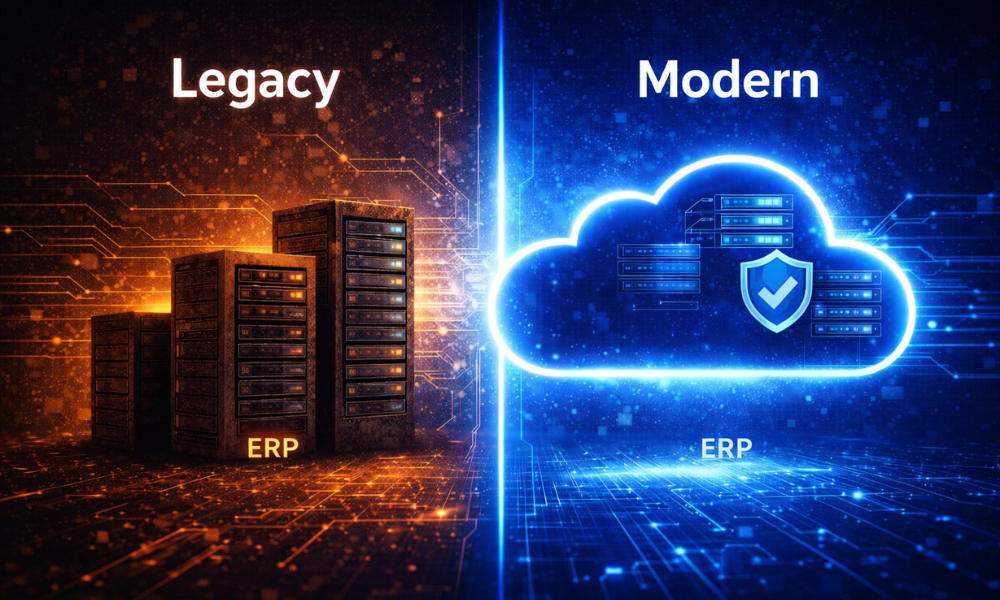
There is a quiet shift happening in enterprise software. It is not dramatic, but it is accelerating quickly. ERP systems are no longer judged on stability alone. They are judged on speed, intelligence, and adaptability. That shift is creating a widening gap between legacy platforms and modern expectations. For many organizations, that gap is becoming harder to ignore.
Legacy ERP systems were built for a different era.
They were designed to manage transactions, store data, and create structure. For years, they did exactly that. They helped businesses scale and standardize operations. That value still exists today. Many organizations continue to rely on these systems successfully. However, the environment around ERP has changed significantly, and expectations have evolved beyond what legacy systems were designed to support.
ERP is no longer just a system of record.
In 2026, ERP is expected to be a system of action. Businesses now require real-time visibility, automation, and intelligent decision support. Recent research in 2025 shows that 68% of employees say outdated systems slow them down and reduce productivity. That statistic highlights a clear shift in expectations and the growing pressure to modernize.
The Cost of Standing Still Is Rising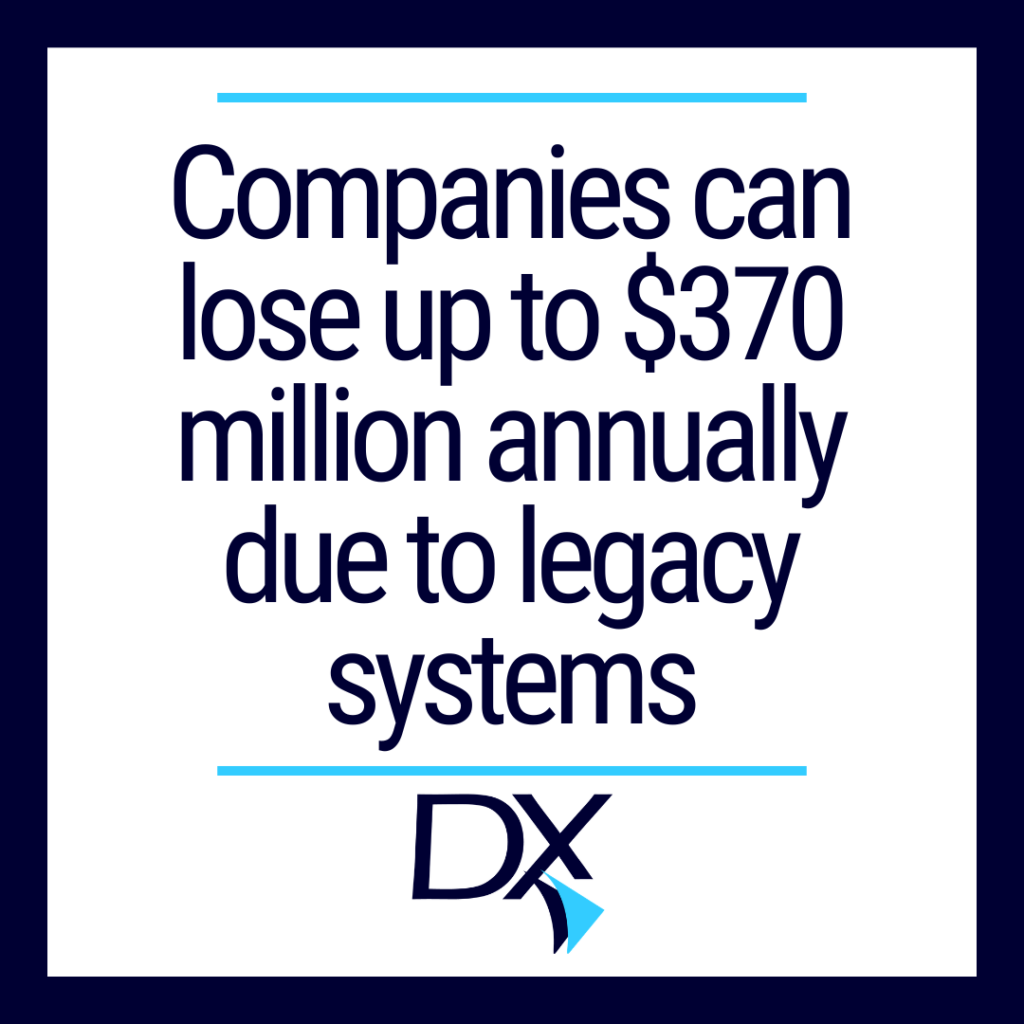
Legacy ERP systems often continue to function, which delays modernization decisions. However, maintaining these systems is becoming more expensive over time. A 2025 enterprise study found companies can lose up to $370 million annually due to legacy systems and technical debt. These costs are not always visible at first, but they compound through inefficiencies, maintenance, and missed opportunities.
Modern businesses do not operate in a single system.
They rely on connected ecosystems that include devices, eCommerce platforms, service tools, and analytics systems. ERP sits at the center of this network. Legacy systems struggle to integrate with modern APIs and real-time data flows. Research shows that 83% of ERP users experience data challenges during integration, often due to disconnected systems.
The real cost is not just financial.
It is operational.
When systems do not connect cleanly, teams rely on manual processes, duplicated data, and workarounds. That slows down decision-making and introduces risk. Over time, these inefficiencies create friction across the organization.
Integration and Speed Are Now Critical
The real risk is not failure.
Most legacy ERP systems do not break.
They fall behind instead.
They become harder to extend, slower to adapt, and more expensive to maintain. Industry projections show that around 70% of ERP initiatives fail to meet their goals, often because organizations underestimate the importance of modernization and alignment with business needs.
Modern ERP platforms change how businesses operate.
Instead of periodic upgrades, they provide continuous improvement. Instead of static reporting, they deliver real-time insights. AI is now reducing ERP implementation timelines by up to 50%, making modernization more accessible than in the past. This shift allows organizations to move faster without taking on the same level of risk seen in earlier ERP transitions.
Speed is becoming a competitive advantage.
Organizations that can act on data instantly are outperforming those that rely on delayed reporting. This is especially important in industries that depend on service response times, inventory management, and customer experience.
Why Timing Matters More Than Ever
Timing matters more than ever.
Businesses that modernize now gain speed, efficiency, and better customer experiences. Those that wait are not standing still. They are falling behind relative to competitors who are already adopting automation, AI, and real-time systems. The longer modernization is delayed, the more difficult it becomes to close that gap.
The smartest approach is not all at once.
Successful organizations take a phased path to modernization. They start with high-impact areas, integrate modern capabilities, and gradually transition workflows. This reduces risk while still moving the business forward.
Legacy ERP still has value.
It provides a foundation that many businesses rely on. The goal is not to replace everything immediately. The goal is to extend that foundation and connect it to modern capabilities that drive efficiency and growth.
The Future of ERP Is Already Here
ERP is no longer just infrastructure.
It is a strategic platform.
Modern ERP systems are designed to connect data, automate workflows, and support intelligent decision-making. They are built to integrate with emerging technologies such as AI, IoT, and advanced analytics.
This shift is already happening across industries.
Organizations that embrace modernization are seeing measurable improvements in efficiency, visibility, and scalability. They are able to respond faster to market changes and dWhy ERP Modernization Matters More Than Ever in 2026eliver better experiences to customers.
The gap between legacy and modern ERP will continue to grow.
Not because legacy systems fail overnight, but because modern systems evolve faster. The businesses that recognize this shift early are the ones that position themselves for long-term success.
Modernization is no longer optional.
It is the next step in staying competitive.