


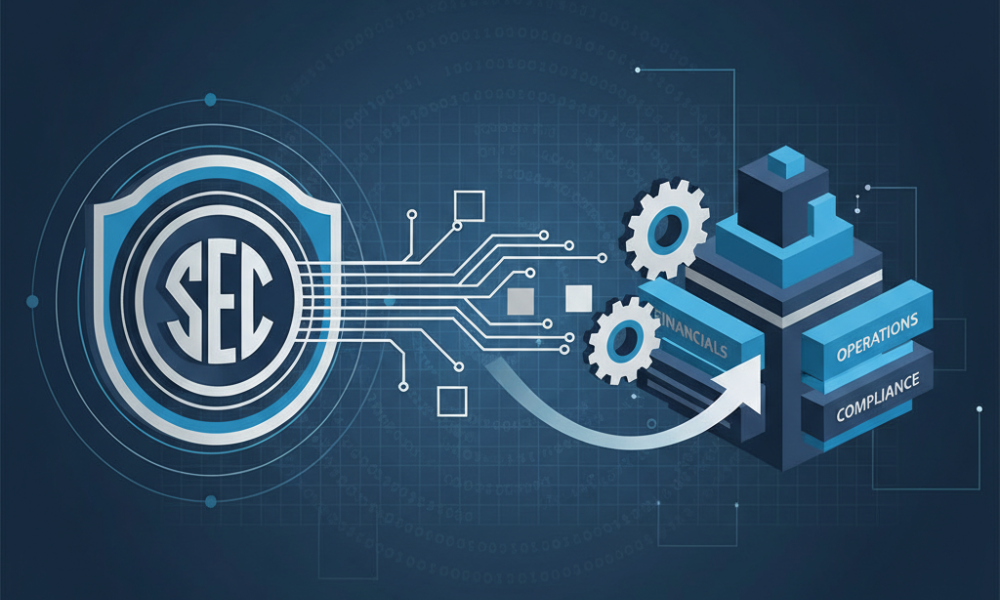
Public companies now live on a disclosure clock. When a material cyber incident hits, the countdown starts. You have four business days from the materiality determination to file Form 8-K Item 1.05. That deadline changes how security, legal, and ERP teams build processes, log events, and share facts.
Penalties are real. Violations can trigger significant fines under the SEC’s cybersecurity disclosure regime. Boards care, and so should your control owners.
This guide turns rules into systems work. You will map obligations to logging, workflows, and data guardrails inside and around your ERP.
What the SEC Requires, Boiled Down
Two pillars matter most for ERP-adjacent teams:
-
Rapid incident disclosure: If you determine a cyber incident is material, file Form 8-K Item 1.05 within four business days. The item describes nature, scope, timing, and actual or expected impact. The clock starts at materiality, not detection. Updates post as 8-K amendments. See the SEC’s final rule and fact sheet for scope and timing.
-
Program transparency: Regulation S-K Item 106 requires annual disclosure of risk management processes, material impacts, management’s role and expertise, and board oversight. That means evidence must exist and be auditable.
Many security teams also track CIRCIA because covered critical infrastructure operators will face separate federal incident reporting to CISA. Alignment now prevents rework later.
Why This Lands Squarely on Your ERP
Your ERP hosts financials, orders, vendors, payroll, and sensitive contracts. Breaches that touch ERP data can quickly become material. Finance needs reliable impact estimates. Legal needs dates and facts. Investor relations needs approved language. Without structured logs and workflows, you lose time.
IBM’s Cost of a Data Breach Report pegs the average breach cost in the millions. Faster identification and containment save real money, which aligns with the SEC’s intent for timely and accurate disclosures.
Build a Disclosure-Ready Control Stack
Translate the rules into layered, testable controls your teams can operate:
Incident Telemetry and Immutable Logs
Instrument ERP and adjacent services for security-relevant events such as privilege changes, failed logins, data exports, API spikes, and vendor connector anomalies. Hash and timestamp logs so Legal can trust them during materiality reviews. Keep inference and integration logs if you employ AI or agent-based automations that interact with ERP data. This supports the nature, scope, timing, and impact elements required in Item 1.05.
Materiality Workflow in Service Management
Create a cyber incident workflow with states such as suspected, validated, scoping, materiality review, decision, 8-K drafting, filed, and amendment. Require Legal and CFO sign-offs at the materiality level. Timebox each state. Capture the determination timestamp because the four-day window starts there. The SEC fact sheet provides helpful context.
A Single Source of Facts
Stand up a restricted incident dossier. Store indicators, impacted systems, data classes, customer counts, and preliminary financial impacts. Connect ERP analytics to drive revenue growth and minimize operational disruptions. A single fact base keeps Legal, Security, and Investor Relations aligned.
Board and Management Evidence
Map S-K Item 106 to artifacts such as committee charters, reporting cadence, tabletop minutes, and roles or skills of executives who oversee cyber risk. Publish a concise program narrative that explains how risks are identified, prioritized, and mitigated.
Vendor and Integration Governance
Register every ERP integration and its data sharing. Attach security attestations and breach notification clauses—record who can export sensitive tables via API. Integrations widen blast radius, so put them on the map.
The Four Day Clock, Operated Like an SRE
Think in service level objectives. Your objective is to achieve disclosure readiness within four business days from the materiality date. Push lag out early.
-
Improve mean time to detect with tuned alerts and enrichment.
-
Shorten scoping with playbooks for GL, AP or AR, HR, and order management modules.
-
Schedule same-day Legal and CFO huddles for materiality and require contemporaneous notes.
File amendments as facts evolve. The SEC’s rule expects updates if details change. Treat 8-Ks as living records.
Inline XBRL Tagging and Content Quality
The SEC wants machine-readable disclosures. If you lag on tagging, catch up so cyber 8-Ks and annual disclosures do not stall in formatting. Use the SEC’s Inline XBRL resources and build templates for Item 1.05 and Item 106 to reduce drafting time and error risk.
Aligning With CISA Without Double Work
Covered entities will report to CISA within CIRCIA timelines once the rule is final. Harmonize your incident dossier so core facts populate both SEC and CISA submissions. One fact set, two outputs, fewer contradictions.
What to Disclose and What to Protect
The SEC requires the nature, scope, timing, and impact of material incidents. It does not require technical exploit details that would increase risk. Establish a house style that quantifies systems affected, data classes, revenue or operations impact ranges, and remediation status without publishing an attacker’s runbook. Counsel can calibrate specifics per incident. See the final rule press release for framing.
Program Metrics Executives Understand
Executives want proof that the program works. Track time from validation to materiality decision, time from decision to 8-K filing, percent of incidents with complete evidence packets, board reporting cadence, and integration coverage. Tie improvements to risk and cost. The IBM report shows earlier containment reduces cost by millions.
Training, Drills, and Real Muscle Memory
Run quarterly tabletops for ERP-specific breach scenarios such as a compromised vendor token, malicious data export, ransomware in the file store, or HR data exposure. Include Investor Relations and Communications. Draft a mock Item 1.05 during the exercise. Review what slowed materiality and fix those choke points.
Common Mistakes to Avoid
-
Starting the clock at detection. The rule starts at materiality, so timebox your assessment.
-
No single fact base. Parallel spreadsheets create contradictions that delay filings.
-
Skipping integration visibility. Untracked connectors complicate scoping and impact estimates.
-
One-time documentation. S-K Item 106 needs living evidence of governance and process.
-
Waiting on CIRCIA final text. Harmonize your data model now. Formats can adapt later. See CIRCIA for scope.
Operational Readiness That Stands Up in Public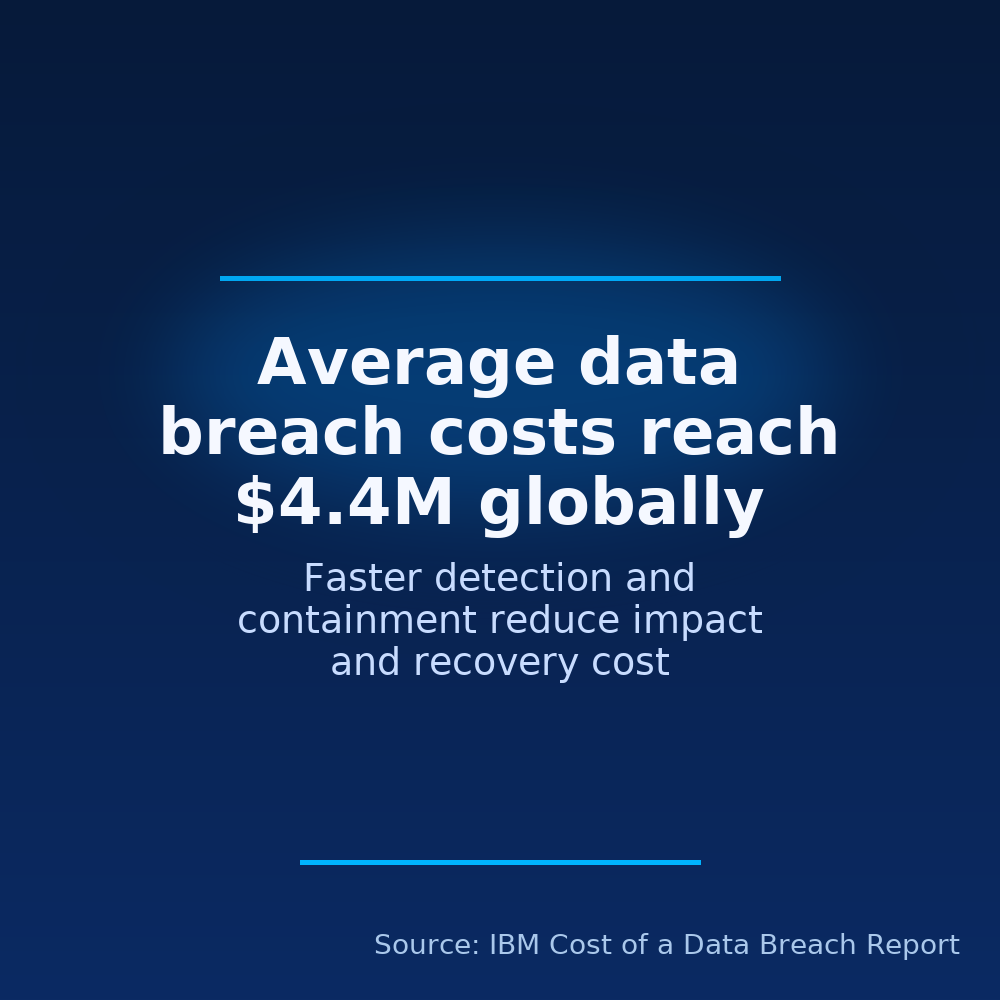

The SEC’s cybersecurity disclosure rules reward readiness and punish ambiguity. ERP is central to that readiness because it anchors the facts that define materiality. Build immutable logs, codify a materiality workflow, maintain a single incident dossier, and keep S-K Item 106 evidence up to date. Calibrate with Legal and Investor Relations, and drill until the four-day clock feels achievable.
The payoff is more than compliance. Teams that detect, scope, and disclose quickly also recover faster and limit financial damage. IBM’s research estimates the average breach cost at around $4.4 million, and faster containment substantially reduces that impact. Treat disclosure as a repeatable capability, not a scramble. When evidence is reliable and workflows are well-rehearsed, boards gain confidence, regulators receive clarity, and customers perceive resilience.