
Manufacturing runs on time. Decisions lose value when data arrives late. Edge-driven ERP solves that delay. It pushes compute to the line. Insights travel from machines to decisions in milliseconds, not minutes.
What “edge-driven ERP” really means
Edge computing executes workloads near data sources. In plants, those sources are PLCs, CNCs, robots, HMIs, and sensors. An edge layer sits between OT assets and corporate systems. It performs local filtering, analytics, and control. The ERP consumes clean events instead of raw noise.
Edge-driven ERP connects three planes. The device plane runs PLC logic and captures telemetry. The edge plane hosts gateways, industrial PCs, and micro-clusters. The enterprise plane contains ERP, MES, WMS, and analytics. Each plane exchanges events through secure, schema-managed streams.
Why speed matters on the factory floor
 Cloud trips introduce round-trip latency. Network jitter also disrupts determinism. Many manufacturing decisions cannot wait. Scrap detection, torque anomalies, and overheating require immediate action. Edge computing reduces latency to single-digit milliseconds on-prem. Cloud paths often exceed tens of milliseconds. That gap changes outcomes.
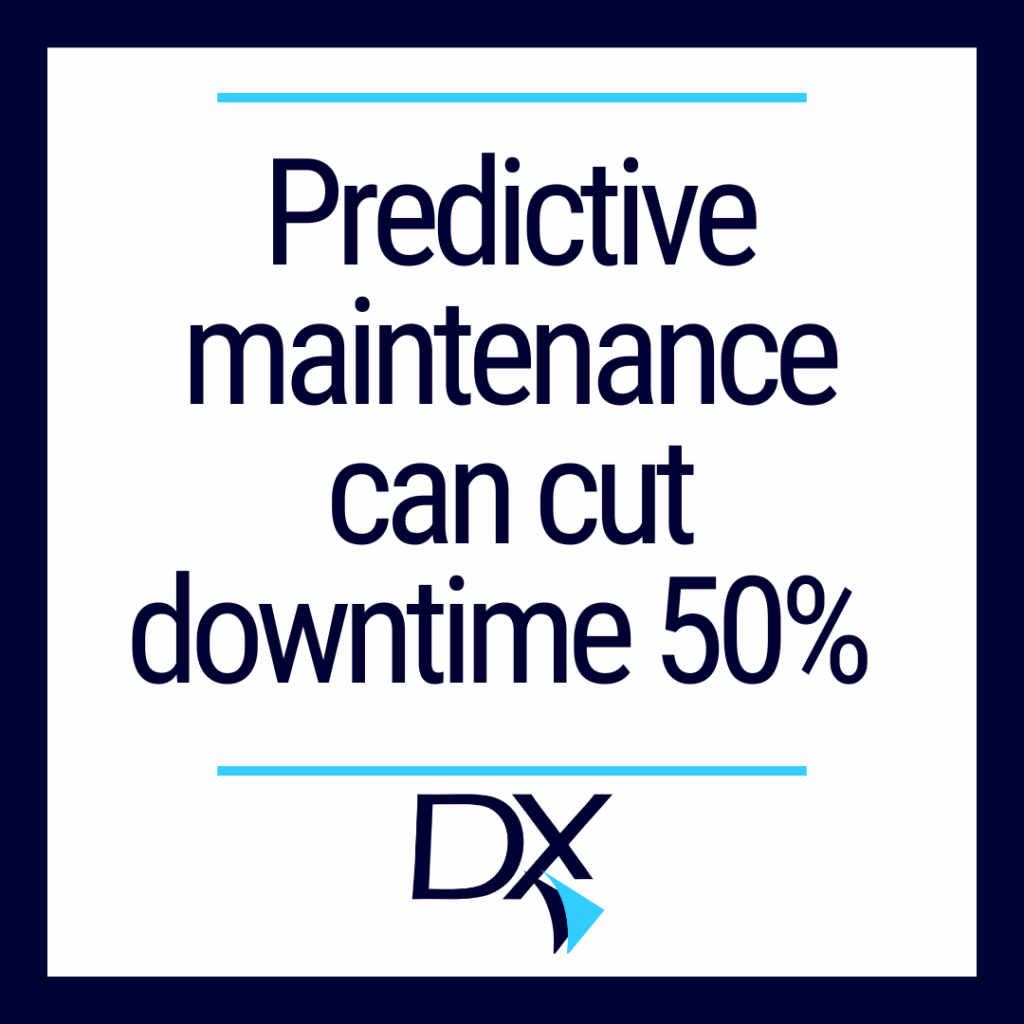
Unplanned downtime remains costly. Industry research estimates losses exceed $50 billion annually for manufacturers. Faster detection and autonomous responses shrink those losses. Predictive strategies help as well. Studies show predictive maintenance can cut downtime 30–50% and extend asset life 20–40%. Edge analytics enables both outcomes by processing vibration, current, and temperature data locally.
Inside the edge architecture
An edge gateway speaks industrial protocols. Common choices include OPC UA, Modbus/TCP, EtherNet/IP, and Profinet. Data lands in a time-series buffer at the gateway. Lightweight stream processors then apply rules. You can implement them with Node-RED, Apache Flink, or similar engines. Simple thresholds watch known limits. Statistical process control catches drift. Tiny ML models classify patterns without heavy compute.
The gateway publishes normalized events. MQTT, AMQP, or Kafka often carry those streams. Each message includes a compact payload and a versioned schema. A local rules engine can trigger actions. Examples include stopping a feeder, flashing an Andon, or creating a maintenance work order.
A plant micro-cluster may host containers. K3s or MicroK8s runs well on fanless industrial PCs. This cluster manages model serving, digital twins, and edge APIs. A small object store holds short-lived histories. The plant keeps operating even when the WAN drops. When connectivity returns, the edge replays queued events to enterprise topics.
How the ERP participates
Traditional ERPs poll for batch updates. Edge-driven ERPs subscribe to events. The ERP receives a “first-class” event: material consumed, cycle finished, parameter out-of-spec, or line changeover complete. Master data resolution happens at the edge or in a shared service. That prevents mismatched item numbers or unit conversions.
Quality events can auto-generate nonconformances. Maintenance events can open work orders with prefilled parts. Production events can adjust takt-time targets and schedules. Finance can post WIP adjustments in near real time. The ERP becomes responsive, not retrospective.
Data engineering at the edge
Garbage in still means garbage out. Establish governance at ingress. Standardize tags, units, and timestamps. Apply calibration rules. Enforce schema evolution with registries. Keep data minimal. Publish only needed context. Heavy images or long raw streams can remain local with on-demand retrieval.
Time-series aggregation reduces bandwidth. Use downsampling and compaction. Keep one-second detail locally for hours. Send minute-level aggregates upstream. This pattern preserves fidelity for fast decisions while protecting WAN links.
AI at the edge
Generative and discriminative models now run on small devices. You can deploy anomaly detection using autoencoders or isolation forests. Vision models detect defects in real time. Language models lightweight enough to run locally guide operators through changeovers. Federated learning keeps data on site. Models receive updates without shipping sensitive runs to the cloud.
Model management matters. Version models, record features, and track drift. Retrain when processes change. Maintain a rollback plan. The edge must fail safe. If a model misbehaves, deterministic rules still protect the line.
Security for OT and ERP convergence
Security cannot be an afterthought. Use a Zero Trust posture end to end. Segment networks with ISA/IEC 62443 principles. Terminate protocols at gateways. Translate to secure messaging. Require mutual TLS for brokers. Store secrets in hardware elements where possible.
Role-based access controls must follow data. The ERP should see only sanctioned topics. Audit every subscription and action. Immutable logs support investigations and regulatory obligations. Many cloud ERPs report improved compliance when paired with strong access controls. Organizations using cloud ERP frequently report higher governance maturity and fewer policy exceptions.
Use cases that deliver value quickly
- Real-time OEE: Edge calculates availability, performance, and quality per cell. ERP dashboards display near-live OEE. Supervisors prioritize constraints immediately.
- Predictive maintenance: Vibration features feed an edge model. The system predicts bearing failure. A maintenance work order and parts reservation appear in ERP automatically.
- Digital traceability: Lot genealogy builds as material moves. Edge events attach barcode scans, torque signatures, and temperatures. ERP can print certificates of analysis instantly.
- Autonomous changeovers: A recipe agent validates tooling, parameters, and materials in sequence. Noncompliant steps block the start. ERP records the verified setup for audit.
- Demand-driven scheduling: ERP receives completion events continuously. APS reschedules short horizons using fresh capacity data. WIP stays lean without starving downstream steps.
Implementation roadmap
Start with a narrow slice. Select one line and one product family. Define a latency budget for decisions. Map required signals and event schemas. Instrument the line with a single gateway. Publish to a sandbox broker. Integrate just one ERP flow, like maintenance work orders.
Measure three core KPIs: OEE uplift, mean time to detect (MTTD), and mean time to respond (MTTR). Track network usage and data quality exceptions. Iterate on rules and models. Expand to adjacent cells after the first success.
Form a cross-functional team. Include controls engineers, network staff, data engineers, and ERP analysts. Assign ownership for schema governance. Establish release gates for edge code and models. Document rollback and offline operations.
Cost, ROI, and scaling considerations
Edge reduces cloud egress and storage costs. Local aggregation shrinks payloads dramatically. Plants often cut WAN traffic by orders of magnitude with smart filtering. Hardware footprints remain small. Many lines run on two or three rugged PCs.
Value compounds as you scale. A second line reuses schemas, images, and rule packs. New plants join by cloning a reference architecture. Central teams push updates through CI/CD. The ERP gains consistent, high-quality events from all sites.
Common pitfalls and how to avoid them
Do not mirror every tag to enterprise systems. Publish events, not raw telemetry. Avoid vendor-locked protocols where possible. Prefer open standards and portable containers. Keep human factors central. Operators must understand alerts and can override safely.
Guard against “pilot purgatory.” Define hard business outcomes early. Tie releases to defect reduction, downtime cuts, or schedule adherence. Report results frequently.
The strategic payoff
Edge-driven ERP gives manufacturers a real-time nervous system. Plants act on facts, not lagging reports. Decisions move to the moment of impact. Scrap drops. Schedules stabilize. Customers see reliable promise dates.
Most importantly, the architecture endures change. New lines, recipes, and suppliers slot into existing patterns. The organization builds a capability, not just a project.
Manufacturing will always demand speed and precision. Edge computing brings both to ERP. With compute at the line and context in the enterprise, teams decide faster, smarter, and with confidence.